 listicle
Best Intelity Alternatives for Boutique Hotels
2026 Guide
Boutique hotels face a distinctive technology challenge. Guests increasingly expect digital convenience, timely communication and a personalised experience, yet independent properties rarely have the same budgets, internal technology teams or operational structures as large hotel groups.
The answer is not necessarily to choose the platform with the longest feature list. It is to find the solution that fits the hotel’s guest journey, operational priorities and existing systems.
Intelity is a comprehensive guest experience platform offering capabilities such as mobile check-in and check-out, digital keys, guest messaging, service requests, staff workflows and branded mobile experiences. For some hotels, that breadth is exactly what is required. Others may prefer a more focused platform, a lighter implementation or a solution built around a particular stage of the guest journey.
This guide compares several Intelity alternatives for boutique hotels and explains how to evaluate them according to what your property genuinely needs.
Why Boutique Hotels Need a Different Technology Strategy
A 40-room independent hotel cannot approach technology in the same way as a 400-room resort or an international hotel group.
Boutique properties often work with smaller teams, closer guest relationships and more fluid responsibilities. One employee may assist with reception, reservations and guest communication during the same shift. Technology therefore needs to simplify the operation without making the service feel standardised or impersonal.
The right platform should help the hotel:
- - Communicate with guests before, during and after their stay
- - Reduce repetitive administrative work
- - Make hotel information and services easier to access
- - Support additional revenue without creating pressure
- - Give employees useful guest information at the right moment
- - Connect effectively with the property’s existing systems
- - Preserve the personal character of the hotel
Technology should strengthen the hotel’s particular way of delivering hospitality. It should not force the property to behave like a larger, more standardised operation.
What Intelity Offers
Before considering alternatives, it is useful to understand the role Intelity plays.
Intelity provides an extensive guest experience platform that can bring together mobile check-in, digital room access, branded guest applications, in-room tablets, guest requests, messaging and staff operations.
This makes it particularly relevant for properties looking for a broad digital ecosystem rather than one specific solution.
However, not every boutique hotel needs every capability. A property may already have online check-in through its PMS, for example, but lack effective pre-arrival communication. Another may want an in-room ordering solution, while a third needs better access to guest preferences.
The decision should therefore begin with the operational problem rather than the platform name.
Intelity Alternatives at a Glance
Platform | Primary strength | Guest access | Hardware approach | Particularly relevant for |
|---|---|---|---|---|
SuitePad | In-room engagement and ancillary revenue | In-room tablet and browser-based access | Tablet-led, with BYOD capability | Hotels with strong room service, spa or in-stay offers |
Duve | Digital guest journey and workflow automation | Web-based guest app | No guest download required | Hotels seeking online check-in, communication and upselling |
D-EDGE CRM | Guest relationships and centralised communication | Guest portal and messaging channels | Primarily software-based | Hotels prioritising CRM, segmentation and communication |
Bowo | Branded guest journey and service promotion | Guest app and optional tablets | Flexible | Hotels with varied services, activities and F&B offers |
Hoteza | Broad guest-facing technology ecosystem | Mobile, television and tablet | Flexible across several touchpoints | Hotels seeking extensive integrations and in-room technology |
Gastfreund by Hotelcore | Digital information and pre-arrival engagement | Web app and branded hotel app | Software-based | Hotels seeking a clear digital directory and simpler implementation |
The-Guest Club | Portable, guest-created preference intelligence | Guest-controlled profile sharing | Hardware-free | Hospitality providers wanting to understand guests before arrival |
1. SuitePad: In-Room Engagement and Revenue Generation
SuitePad is best known for its in-room tablet solution. Hotels can use it to replace printed directories, present hotel information, promote services, facilitate food and beverage ordering and communicate with guests during their stay.
It also offers a browser-based bring-your-own-device option, allowing guests to access hotel information and services from their own phones without downloading an application.
One of SuitePad’s differentiating features is its performance-based commercial model. Rather than relying exclusively on a standard subscription, eligible hotels can pay according to the revenue and savings generated through the platform. Hotels should confirm the applicable conditions because the performance model is intended for properties meeting particular room-count and service requirements.
SuitePad may be a strong option when the hotel’s priorities include:
Increasing room service, spa and ancillary bookings
Replacing printed in-room information
Communicating with guests during their stay
Promoting more sustainable housekeeping choices
Creating a consistent digital touchpoint inside every room
Its greatest value is generally experienced during the stay. Hotels primarily seeking deeper pre-arrival guest knowledge may need to combine it with other tools.
2. Duve: A Centralised Digital Guest Journey
Duve covers several stages of the guest journey, including pre-arrival communication, online check-in, a web-based guest app, upselling and guest messaging.
Guests can access the experience through a link without downloading an application. This can reduce one of the most common barriers to digital adoption: asking someone to install another app for a single stay.
Duve can support communication through channels including email, SMS and WhatsApp, while helping teams centralise conversations and automate recurring messages. Its online check-in capabilities can also collect registration information and prepare guests before arrival, depending on the hotel’s system configuration.
Duve may be suitable for boutique hotels wanting to:
- Digitalise pre-arrival and check-in processes
- Bring guest communication into one working environment
- Automate recurring messages
- Present upgrades and additional services before arrival
- Offer a branded digital guest area without requiring an app download
The most important consideration is how its workflows connect with the hotel’s PMS and current communication processes. Automation only creates value when it removes work rather than adding another dashboard for employees to manage.
3. D-EDGE CRM: Guest Relationships and Unified Communication
D-EDGE CRM, formerly LoungeUp, focuses on guest relationship management, communication and personalisation throughout the hotel journey.
The platform can help hotels centralise guest information, segment audiences, coordinate communications and maintain contact before and after a stay. Its purpose extends beyond handling operational requests. It also supports longer-term guest relationships, retention and targeted communication.
D-EDGE CRM may be particularly relevant for hotels seeking to:
- Consolidate guest communications
- Build more structured guest profiles
- Segment guests for relevant campaigns
- Coordinate pre-stay and post-stay communication
- Strengthen repeat-stay and loyalty strategies
This makes it different from solutions primarily focused on in-room technology. Hotels comparing D-EDGE CRM with Intelity should decide whether their main requirement is a broad guest-experience ecosystem or a stronger customer relationship and communication capability.
4. Bowo: Branded Guest Experiences and Service Promotion
Bowo provides a digital guest journey that can include automated pre-stay communication, a customised guest app, online check-in, digital keys, service presentation and in-stay interaction.
The platform is designed to help hotels make their facilities and experiences more visible. This is particularly relevant for properties with restaurants, bars, wellness facilities, excursions or other services that guests may not discover without timely communication.
Bowo may suit hotels looking to:
- Create a highly branded digital guest experience
- Promote F&B, spa and activity bookings
- Communicate with guests before arrival
- Simplify elements of the arrival process
- Connect hotel services within one guest-facing interface
Its value will depend on how much the hotel has to offer and how well those offers are maintained within the platform. A sophisticated guest app requires active content management, relevant offers and clear internal ownership.
5. Hoteza: A Broad Guest-Facing Technology Ecosystem
Hoteza offers guest-facing solutions across mobile devices, televisions and tablets. Its platform includes capabilities such as digital check-in, mobile keys, guest communication, in-room entertainment, service ordering and an AI-supported concierge.
A notable strength is its extensive integration environment, covering hotel systems such as PMS, POS, room-management systems, payment solutions and mobile-key providers.
Hoteza may be appropriate for properties wanting to:
- Connect several digital guest touchpoints
- Combine mobile, television and in-room experiences
- Integrate ordering directly with hotel operations
- Introduce digital keys and room controls
- Automate responses to routine guest questions
- Support a multilingual international audience
Because the platform covers numerous areas, hotels should carefully define which components they actually intend to use. A phased implementation may be more effective than attempting to introduce every capability simultaneously.
6. Gastfreund by Hotelcore: Digital Information and Pre-Arrival Communication
Gastfreund, part of Hotelcore, offers a digital guest directory and hotel app covering the journey before, during and after the stay.
Its features can include Journey Mail for pre-arrival communication, hotel information, local recommendations, digital services, booking enquiries, feedback collection and integrations supporting processes such as pre-check-in and invoice access.
Gastfreund may be a good fit for hotels seeking to:
- Replace printed guest directories
- Provide arrival information in advance
- Present hotel services in one accessible place
- Allow guests to make simple requests digitally
- Introduce a guest-facing solution without building a complex technology ecosystem
Its relative simplicity may appeal to smaller hotels whose immediate priority is improving information delivery and pre-arrival engagement.
Where The-Guest Club Fits
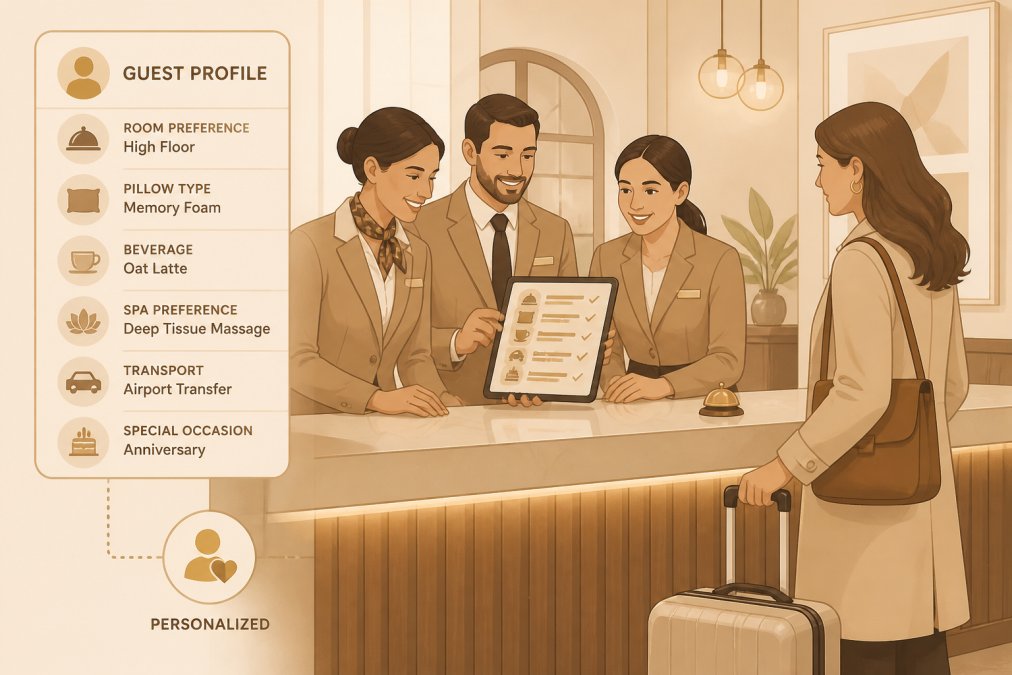
The-Guest Club addresses a different but increasingly important challenge: how hospitality teams can understand individual guest preferences before arrival.
Most hotel technology platforms begin with the reservation or with information previously collected by the property. The-Guest Club begins with the guest.
Guests create and manage their own hospitality preference profiles, including information relevant to accommodation, dining, wellness and other service environments. They decide when and with whom to share that information.
For the hospitality provider, this creates an opportunity to understand important preferences before the experience begins. Instead of asking the same guest to repeat the same information at every property, the team can prepare with greater clarity.
The-Guest Club is not positioned as a replacement for a PMS, digital key, hotel CRM or in-room tablet. It can complement those systems by adding a portable layer of guest-created intelligence.
This distinction matters because operational technology and guest understanding are not the same thing.
A platform may make it easier to order room service, complete check-in or request a late checkout. That does not necessarily mean the team knows that the guest prefers a quiet arrival, has particular dining restrictions or values specific room conditions.
For boutique and luxury hospitality, the strongest technology strategy may therefore combine:
- A PMS as the operational system of record
- A guest-experience platform for digital services and communication
- A guest-intelligence layer that helps the team prepare personally
This is where The-Guest Club can add value alongside platforms such as Intelity, Duve, SuitePad, D-EDGE CRM, Bowo, Hoteza or Gastfreund.
How to Choose the Right Platform
Selecting a guest experience platform should begin with a clear account of the problem the hotel wants to solve.
1. Identify the Most Important Guest-Journey Gap
Is the main difficulty slow check-in, fragmented communication, low awareness of hotel services, repetitive administrative work or limited knowledge of guest preferences?
Each of these problems may require a different solution.
2. Review Existing Capabilities
Many hotels already pay for functionality they do not fully use. Before purchasing another platform, review the capabilities available through the PMS, CRM, booking engine, point-of-sale system and existing communication tools.
The objective is to close genuine gaps, not duplicate features.
3. Confirm Integration Depth
The presence of a vendor logo on an integration page does not always explain what information moves between the systems.
Ask practical questions:
- Which data is exchanged?
- Is the information transferred in one direction or both?
- How frequently is it updated?
- Which processes still require manual entry?
- What happens when information changes?
- Who supports the integration if something stops working?
A technically available integration is not always an operationally useful one.
4. Consider the Guest Experience
A digital solution should make the journey easier. Requiring multiple downloads, registrations or unfamiliar interfaces may create more friction than convenience.
Consider how guests will access the platform, at what stage they will encounter it and whether the value is immediately clear.
5. Consider the Employee Experience
The same principle applies to staff. If employees must monitor several screens, copy information between systems or search for relevant details, the platform may add workload.
Ask vendors to demonstrate real employee workflows, not only the guest-facing interface.
6. Define Success Before Implementation
Before introducing a platform, establish what should improve. Useful measures may include:
- Online check-in completion
- Guest response rates
- Service-request handling time
- Additional service bookings
- Front-desk administrative time
- Use of the digital guest directory
- Repeat-stay indicators
- Guest feedback
- Staff adoption
The most valuable measures will depend on the original problem the hotel intended to solve.
Hardware-Free or Hardware-Led?
The choice between guest-owned devices and dedicated hotel hardware is not simply a technology decision. It influences the service experience and the hotel’s operational responsibilities.
Dedicated in-room tablets give the property greater control over presentation and ensure that a digital interface is available in every room. They can work particularly well when guests frequently order food, book spa treatments or interact with hotel services during their stay.
They also require installation, content management, cleaning, maintenance and eventual replacement.
Browser-based guest platforms reduce the need for physical equipment and allow guests to use a familiar device. However, visibility becomes important. Guests need a clear reason and an easy opportunity to open the link.
Some hotels may benefit from a hybrid approach: using hotel hardware in selected areas while also allowing guests to access services from their own devices.
Implementation Matters as Much as Selection
Even the right platform can fail if the implementation is unclear.
Hotels should establish:
- A responsible internal project owner
- Defined workflows for guest requests
- Training for every affected department
- Clear escalation procedures
- A realistic launch schedule
- A process for maintaining content and offers
- Regular reviews of guest and employee usage
Starting with a focused pilot can be more effective than launching every feature at once. A hotel might begin with pre-arrival communication and online check-in, then introduce service ordering or additional automation once the team is comfortable.
Technology adoption is not completed when the platform goes live. It becomes successful when it is naturally incorporated into how the hotel operates.
Final Perspective
The best Intelity alternative is not necessarily the platform with the greatest number of features. It is the one that addresses the hotel’s most important needs while fitting naturally into its operating model.
SuitePad is particularly strong in the room. Duve brings together much of the digital guest journey. D-EDGE CRM focuses on guest relationships and communication. Bowo helps hotels present a branded range of services. Hoteza offers an extensive guest-facing ecosystem. Gastfreund provides an accessible route into digital information and pre-arrival engagement.
The-Guest Club contributes something different: guest-created preference intelligence that can help hospitality teams prepare before the guest arrives.
For boutique hotels, the real opportunity is not to digitalise every interaction. It is to use technology selectively so that employees spend less time searching for information, repeating administrative tasks and reacting to avoidable requests.
That creates more time for the part of hospitality that technology cannot replace: understanding the person in front of you and responding with genuine care.
Discover how The-Guest Club can help your team understand guest preferences before arrival.
Become a The-Guest Club Member →

Frequently Asked Questions
What is the best Intelity alternative for a boutique hotel?
There is no single best alternative for every boutique hotel. SuitePad may be appropriate for in-room engagement, Duve for a web-based guest journey, D-EDGE CRM for guest relationships, Bowo for service promotion, Hoteza for a wider technology ecosystem and Gastfreund for digital information and pre-arrival communication. The right choice depends on the hotel’s specific operational gap.
Do boutique hotels need a complete guest experience platform?
Not always. Some properties only need to improve one or two stages of the journey. A focused solution that integrates well with existing systems may create more value than a comprehensive platform whose features remain underused.
Should a guest experience platform replace the PMS?
In most cases, no. The PMS remains central to reservations and hotel operations. Guest experience platforms generally extend its capabilities through communication, check-in, service access, guest engagement or workflow automation.
Do boutique hotels need the same technology stack as large resort chains?
No. Boutique properties benefit from streamlined, focused solutions rather than enterprise platforms designed for hundreds of rooms and complex organisational structures. Boutique hotels typically prioritise personalisation, staff empowerment, and guest intimacy over high-volume automation. Look for platforms that support your specific guest count and operational model, offer flexible pricing aligned with smaller budgets, and enable your concierge team to deliver bespoke service rather than standardised workflows. The best solution for a 50-room luxury property differs significantly from one serving a 500-room resort.
Is The-Guest Club an alternative to Intelity?
The-Guest Club serves a different purpose. Intelity provides hotel-operated digital guest experience and operational capabilities. The-Guest Club enables guests to create and share portable hospitality preference profiles. The two approaches can complement each other.
What should hotels ask during a platform demonstration?
Ask the vendor to show the complete journey for both the guest and the employee. The demonstration should include the hotel’s actual PMS, the information exchanged between systems, daily staff workflows, content-management responsibilities, implementation support and how success will be measured.
How can a hotel avoid adding another underused system?
Begin with a clearly defined operational problem, involve the employees who will use the platform, confirm integration details and introduce features in manageable stages. Adoption should be measured after launch, and features that create unnecessary work should be adjusted or removed.